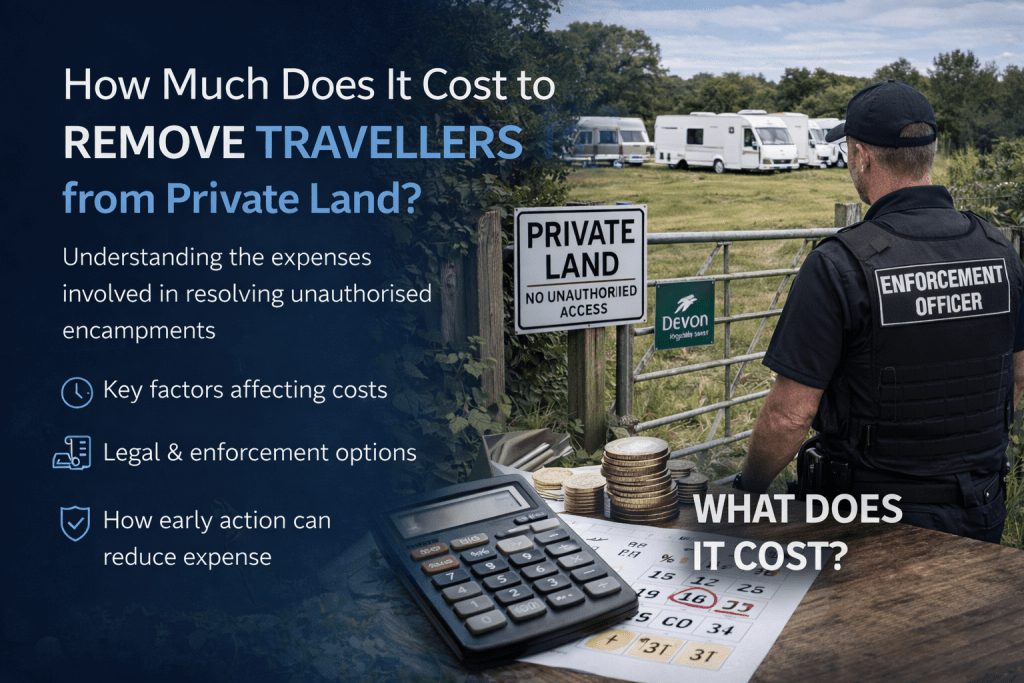
When an unauthorised encampment appears, one of the first concerns for landowners is cost. Alongside disruption and potential damage, understanding the financial implications of removing trespassers is essential.
The cost to remove travellers from private land can vary depending on several factors, including the size of the encampment, the legal route required and how quickly action is taken.
At West Country Bailiffs, we provide clear and practical guidance from the outset, helping landowners understand the process and avoid unnecessary expense.
Why Costs Can Vary
There is no fixed cost for removing an unauthorised encampment. Each situation is different, and the approach taken will influence the overall cost.
Key factors include:
- Number of vehicles and occupants
- Size and type of land
- Urgency of the situation
- Legal route required
- Level of resistance encountered
- Clean-up and repair requirements
Early intervention is often the most cost-effective approach. Delays can increase the scale of the issue and lead to additional expense.
The Main Cost Factors Explained
Size of the Encampment
Smaller encampments with only a few vehicles are generally quicker and more straightforward to resolve.
Larger encampments involving multiple caravans, vehicles and equipment may require additional time, resources and coordination, which can increase costs.
Legal Route Used
The method used to remove travellers from private land plays a significant role in cost.
Some routes can be resolved more quickly, while others involve court proceedings and associated fees.
Options may include:
- Common law eviction
- Possession proceedings through the court
- Interim possession orders
Each route has different requirements, and choosing the correct one from the outset avoids unnecessary expense.
For a full explanation of these legal options, see our guide on how to remove travellers from private land quickly and lawfully.
Speed of Action
One of the biggest influences on cost is how quickly the landowner acts.
If action is taken immediately:
- The encampment is less likely to grow
- Voluntary departure is more likely
- Legal processes may be avoided
If action is delayed:
- More vehicles may arrive
- Waste and damage may increase
- More complex legal action may be required
In most cases, early intervention results in lower overall cost.
Level of Cooperation
If occupants leave voluntarily following professional engagement, the process is faster and more cost-effective.
If they refuse to leave, formal legal action may be required, which increases both time and cost.
Site Conditions and Location
Rural land, restricted access points or complex site layouts can influence how enforcement is carried out.
For example:
- Agricultural land may require different access planning
- Construction sites may involve safety considerations
- Urban locations may require more structured coordination
These factors can affect the resources required and overall cost.
Clean-Up and Repairs
Once an encampment has been removed, additional costs may arise depending on the condition of the land.
This can include:
- Waste removal
- Surface repairs
- Fence or gate repairs
- Restoration of access points
Taking preventative measures after removal can reduce future costs.
Is It Cheaper to Wait?
Some landowners delay taking action in the hope that the encampment will leave on its own.
In reality, waiting often increases the overall cost.
Delays can lead to:
- Larger encampments
- Increased damage
- Greater clean-up costs
- Longer legal processes
Acting early is almost always the more cost-effective option.
Balancing Cost and Speed
There is often a balance between speed and cost.
Faster resolution may involve immediate enforcement action, while slower approaches may rely on formal legal processes.
However, the most important factor is choosing the correct route from the outset.
A professional assessment ensures that you do not spend more than necessary while still achieving a timely resolution.
How Long Costs Typically Relate to Time
Cost and time are closely linked.
Situations resolved quickly through voluntary departure are generally less expensive.
More complex cases involving court proceedings may take longer and involve additional costs.
If you are also considering timeframes, our guide on how long it takes to remove an unauthorised encampment explains what to expect.
Why Professional Advice Saves Money
Trying to handle an unauthorised encampment without professional support can lead to costly mistakes.
Incorrect action may result in:
- Legal complications
- Delays in removal
- Increased enforcement requirements
- Greater long-term expense
Professional enforcement ensures:
- The correct legal route is chosen
- The process is handled efficiently
- Risks are minimised
- Costs are controlled
Preventing Future Costs
Once your land has been cleared, prevention is key to avoiding repeat expense.
Landowners are often advised to:
- Install secure gates or barriers
- Block vulnerable access points
- Improve perimeter security
- Carry out regular inspections
Investing in prevention can significantly reduce the likelihood of future encampments and associated costs.
Clear Guidance from the Start
At West Country Bailiffs, we understand that cost is a major concern for landowners dealing with unauthorised occupation.
With over 30 years of experience, we provide clear, practical advice tailored to your situation, helping you take the most effective and cost-efficient route to remove travellers from private land.
Take Action Early to Reduce Cost
If travellers have occupied your land, delaying action is likely to increase the overall expense.
Early professional involvement allows the situation to be assessed quickly and resolved using the most appropriate legal approach.
Contact West Country Bailiffs for clear advice and immediate support in removing unauthorised encampments and restoring control of your land efficiently and lawfully.