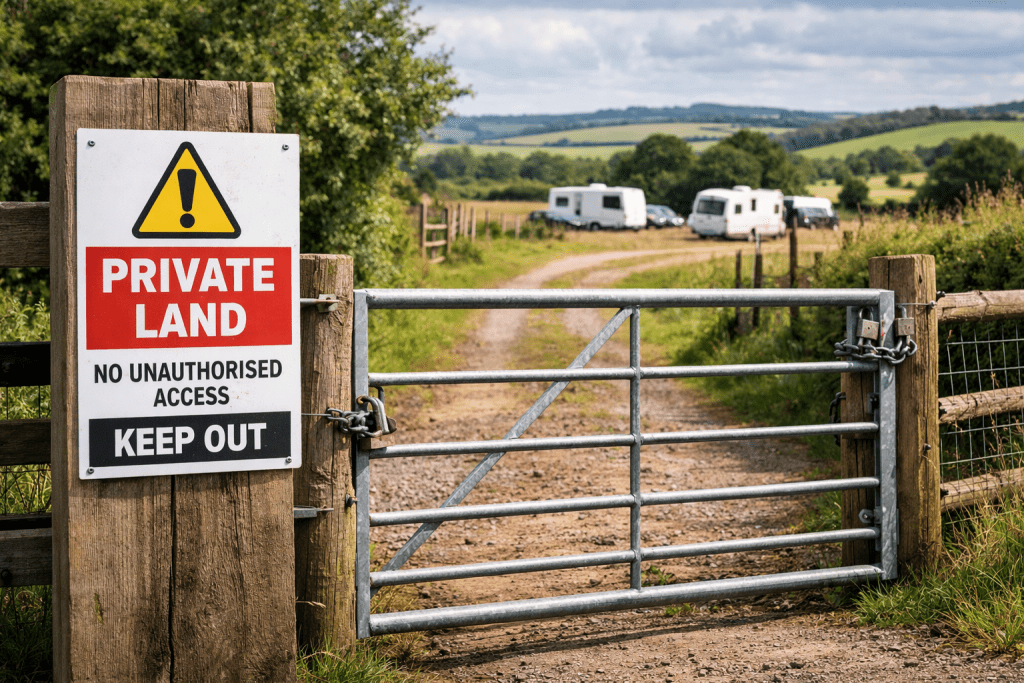
Finding an unauthorised encampment can be stressful, especially when people search terms like gypsies on private land and want quick answers. If this has happened to you, the priority is to regain control of your land safely and lawfully while avoiding unnecessary conflict and delay.
This guide explains practical steps to take, what people often mean by gypsy rights on private land and when professional support can help you resolve the situation quickly.
A quick note on wording: many people search using “gypsy” but it can be used offensively. In this article we use it only in the context of common search phrases. A more respectful and accurate umbrella term is often Gypsy, Roma and Traveller.
Step 1: Put safety and evidence first
Before taking action, slow things down and get the basics right:
- Do not threaten, intimidate or attempt to physically remove anyone yourself
- Consider safety risks for staff, residents, livestock and vehicles
- Photograph entry points, vehicle registration plates (where visible) and the general layout
- Make a short log of dates, times and anything you observe such as damage or aggressive behaviour
- If it feels safe, open calm communication and ask who is leading the group and how long they intend to stay
This early evidence can be very useful if you need formal action later.
Step 2: Understand what is happening legally
On private land, an unauthorised encampment is usually a form of trespass. In most cases, it is the landowner’s responsibility to decide what action to take and to start the process of regaining possession.
Police involvement is not automatic. Police typically focus on crime, serious disorder and specific legal thresholds. That means a situation can feel urgent, but the best route depends on what is happening on site.
Step 3: Gypsy rights on private land and the common misunderstandings
A lot of confusion comes from the phrase gypsy rights on private land. Some people assume it means you cannot remove an encampment. That is not correct.
What is true is that people have legal protections such as:
- Protection from discrimination
- Certain welfare considerations in some circumstances
- The expectation that actions are carried out reasonably and proportionately
What those protections do not create is an automatic right to occupy private land without consent. Landowners can take lawful steps to regain possession, provided the approach is handled correctly.
Step 4: The two routes for removal
There are generally two routes, and the right one depends on the facts.
1) Civil route (often used on private land)
This is where a landowner uses the civil process to regain possession. It is a structured route, and when done properly it provides clarity and authority.
2) Police powers (only in specific circumstances)
Police may use powers to direct people to leave where certain legal thresholds are met, for example where there is serious disruption, damage or other qualifying conditions.
The key point is this: choosing the wrong route or handling it badly can waste time. A professional approach helps you move quickly while reducing risk.
Step 5: A sensible action plan for landowners
If you have discovered gypsies on private land you own or manage, this order of actions is usually the safest:
- Document the situation clearly (photos, notes, timings)
- Confirm boundaries and access points so you know exactly what land is affected
- Attempt calm communication where it is safe to do so
- Avoid actions that escalate conflict or create legal risk
- Move quickly onto the correct removal route based on facts on the ground
- Secure the site properly once it is clear to reduce repeat incidents
Step 6: How West Country Bailiffs can help
Unauthorised encampments can quickly become a serious issue. Delays can increase risk of damage, business disruption and tension with neighbours or customers.
West Country Bailiffs supports landowners with professional traveller and gypsy eviction services to help regain possession efficiently and safely. We are experienced in property and land recovery, and we focus on practical outcomes with a firm but respectful approach.
Professional traveller and gypsy eviction services
If you need fast advice based on your specific situation, speak to our team and we will explain the best next step.
Remove travellers from private land
FAQs
Can I remove gypsies on private land immediately?
Sometimes groups leave quickly after calm communication, but formal removal often requires the correct legal route. The fastest option depends on what is happening on site and what thresholds apply.
Do gypsy rights on private land stop eviction?
No. Legal protections do not create a right to occupy private land without permission. They affect how actions should be handled, not whether you can lawfully regain possession.
Is trespass a police matter?
Often it is primarily a civil matter for the landowner. Police may act where there is crime, serious disorder or where specific legal conditions are met.
Should I block vehicles in or cut off services?
Avoid anything that could escalate the situation or create legal risk. Focus on evidence, safety and a lawful plan to regain possession.
What if there is damage or threatening behaviour?
Report crimes immediately, document everything and avoid confrontation. Professional support can help you progress the civil route while criminal issues are dealt with separately.
How do I stop it happening again?
Once the land is clear, focus on prevention: access control, gates, barriers, bunding, signage and a rapid response plan.